Race and Hair: Militancy, Image, and Politics

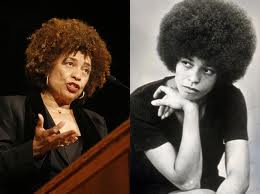
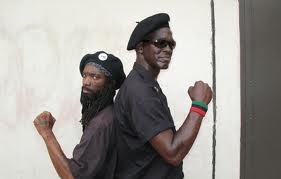
I remember during the presidential elections, when opponents were trying to disparage Michelle Obama, they put up a picture of her with an Afro.  They also negatively portrayed she and President Obama’s fist bump in the same picture while clothing him in Muslim garb.  (Don’t even get me started about diversity and religion, that’s a whole other series.)   So, I could empathize with my niece in being cautious about going natural in today’s business world for I too was subjected to the playful jeers of being called “Florida Evans and Angela Davis.”  I was even shown the traditional “black power fist ” (reminiscent of the Black Power movement) when I wore my hair natural.  Surprisingly most of the comments were from my own family.  If my family felt this way, what could I expect from a world still engulfed in issues of race, identity, and challenges accepting diversity and difference?  So even  though I’ve stopped chemically relaxing my hair, I’m still blow drying it straighter than it was before I relaxed it.  What’s up with that?  I’m still processing.

What subconscious fears, messages, and memories are associated with the these figures that I was jokingly and condescendingly associated with?

BTW.  I see it as an honor to be associated with either of these two trailblazers and sheroes. According to an online biography, Esther Rolle (Florida Evans on Good Times)  “Compelled to fight racial stereotypes, insisted before accepting the series that a strong father figure be central in the show (actor John Amos).   She even left the show for a season protesting the negative role model perpetuated by Jimmie Walker’s jive-talking J.J. character.   Angela Davis was indeed controversial, but must be admired for fighting for what she believed in.  Today she is still fighting for justice by fighting against the prison industrial complex that has become today’s sanctioned form of human enslavement providing a steady supply of cheap prison labor for big business at the expense of rehabilitation.

 So let’s talk  candidly about hair, militancy, and image.  Do you think that some of our reactions to wearing our hair natural are subconscious fears from being associated with those who have been political targets , ostracized, and labeled as militant?   And to those baby boomers who are not African American, what images do natural hair conjure?

Please don’t just read and nod, share your opinions.

I’m Barbara Talley, the poet who speaks and inspires.  To find out more about me check out: What Does Barbara Do? or visit  my website.
Race and Hair: Do You Wear Your Hair Natural?

Appreciating Our Natural Hair

I am so happy to soon be witnessing a beautiful example of unity in diversity as demonstrated in my niece’s upcoming nuptials.   I was heartened by the unique respect for diversity that she and her fiance both live and breathe.  He is Indian and Hindu; she is Christian and African-American.  Yes, this is the same couple that is donating their wedding gifts to charity.  So it’s not their diversity alone that make them special, but their character.  I sat in awe at a recent dinner as my niece’s fiance expressed his knowledge of the plight of African American’s in history, his love for the natural texture of my niece’s hair, and his love and respect for both my niece and sister.

He was the one she explained that encouraged her to “go back natural.” She commented that while “going natural” that she had more challenges with people from within our own culture than from the outside.

What Does Hair Mean to You?

Last month I spoke to an audience in Florida at an event organized by 100 Concerned Black Women and the topic of hair came up.  My co-presenter Iris Cooper had cut off her hair and a lady in the audience who self reportedly had worn wigs most of her life challenged why she did it.  The next day the older lady came to a followup session dawning her own hair.  She recounted how freeing it was.  She somehow had felt she needed validation, permission, and acceptance to free herself.  She explained how all her life she was called ugly because of her short hair.  And, now there is another trend, cutting off our hair that we’ve taken so long to grow and  letting go of what “long hair” means.  How do you feel about cutting your hair off?   It appears that we’ve still got a lot of work to do before we get to the point that we realize that we don’t all have to look the same and can see our own naturalness as beautiful.  What does your hair mean to you? Does it represent beauty, culture, image, or identity.  Is it your crown or crowning glory?  Please comment and share “your hair story.”

I’m Barbara Talley, the poet who speaks and inspires.  To find out more about me check out: What Does Barbara Do? or visit  my website.
Race and Marriage: The Final Frontier

Baha’ullah writes, ” Glory not that you love your country, but that you love your kind for the earth is one country and mankind its citizens.” 

So many people now of late are speaking of assimilation (melting pot) as the only way to live together in harmony.  Instead of welcoming diversity and learning about it, far too many fear what is different and seek to subjugate or annihilate that which they refuse to try to understand.  The same sun warms us all.  The same light gives us vision. The same red blood runs through our veins.  We truly are one people living on one planet and our strength is in our vision of seeing and acknowledging our unity and our diversity.  That will probably happen when we finally learn that there is only one human race and allow it to play out in our language, conversations, and beliefs.

We Must Create a New Language of Oneness

We’ve got to get rid of terms like “race” , “inter-racial” and “mixed” and create a new language of oneness.  Science has already proved that we are one human race and the “divisive terms of races as we live them now” are not real.  Many people profess to believe in equality and oneness, until it comes to marriage.  Perhaps marriage is the final frontier to traverse to prove to the skeptics, doubters, and racists, that in reality we are all the same specie. What do you think?  How do you view marriages between people of different ethnicities?  Would you marry someone of a different ethnicity, color, or religion than you?  What about if it were your children?  Since there is ONLY ONE HUMAN race, how do you feel about getting rid of man-made, divisive, and erroneous terms?  And what are your suggestions for bringing about the oneness and conciliation that our world is literally dying for lack of?

I’m Barbara Talley, the poet who speaks and inspires.  To find out more about me check out: What Does Barbara Do? or visit  my website.

We Don’t Want Any Wedding Gifts

Last night I had dinner with two of my sisters, my niece and her fiance.  Both my niece and her fiance are lawyers that have graduated from Georgetown.  They are both such unique young people, so much so that I awoke this morning and had to take some time to reflect on my thoughts especially their request to not give them any wedding gifts, but to instead give the money to charity.  And, they are not wealthy.  They are just starting out, have very few material trappings, and their share of college loans to repay and yet their thoughts are not on themselves but on the less fortunate.  In a sea of materialism,  and “me” mentality, they did NOT want gifts.  They wanted a simple ceremony so that their friends and family from around the world could share in their union.  And if it weren’t for respecting families and traditions, they wouldn’t have done a big wedding at all.  If the future has more young folks like them, then we have a bright future ahead of us indeed.

I’m Barbara Talley, the poet who speaks and inspires.  To find out more about me check out: What Does Barbara Do? or visit  my website.